Focus on Driving. “Don’t Do on the Road What You Wouldn’t Do in Life” Campaign
In everyday life, a lack of concentration can lead to a funny mistake. Behind the wheel, the consequences can be…
Read more home
A2 Świecko - Konin | Every kilometer matters
home
A2 Świecko - Konin | Every kilometer matters
The “Slow Down the Noise” campaign is primarily addressed to drivers. Its goal is to explain what generates traffic noise and how it can be limited. According to the report Environmental Noise in Europe 2025, more than 20% of Europeans are exposed to excessive noise levels caused by road, rail and air traffic. Road traffic remains the most widespread source of transport noise both in Europe and in Poland, making its reduction one of today’s key environmental challenges.
We all want efficient transport, a well developed road network and easy access to high speed roads. Unfortunately, increased traffic often means higher noise emissions. With this campaign, we want to show that noise levels can be effectively reduced – both through appropriate infrastructure and responsible driving behaviour, says Anna Ciamciak, Spokesperson for Autostrada Wielkopolska.
Each of us can contribute to making travel quieter and more environmentally friendly. Choosing a smooth driving style, respecting speed limits and taking care of vehicle condition all make a real difference. Together, we can reduce road noise and improve the quality of life for nearby residents.
The level of traffic noise is influenced by:
The amount of noise generated by a vehicle depends on several key factors:
A vehicle in good technical condition—properly functioning engine, cooling fan, exhaust system and transmission—means quieter driving. Choosing low noise tyres and regularly checking tyre pressure is equally important. Underinflated tyres have a larger contact area with the road surface, which increases noise levels.
At higher speeds, aerodynamic noise caused by air resistance becomes increasingly dominant.
Sudden braking, rapid acceleration and excessive speed significantly increase noise emissions. That is why drivers’ behaviour plays a crucial role in reducing road noise. Smooth, calm driving, anticipating manoeuvres and performing them gradually help lower noise levels while also improving safety for all road users.
✅ Drive smoothly and calmly – avoid abrupt acceleration and braking, which increase both noise and fuel consumption.
✅ Reduce speed by 10 km/h – depending on vehicle type and speed, this can lower noise emissions by 1–1.3 dB. This difference is noticeable both for nearby residents and for drivers themselves, making journeys quieter and safer.
Roads with frequent intersections and traffic lights generate additional noise due to repeated braking and acceleration. Motorways do not have such features; however, higher speed limits can result in higher noise levels.
One of the most effective ways to reduce road noise is to introduce lower speed limits.
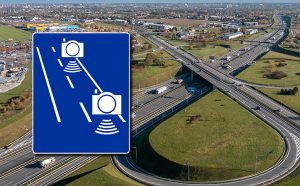
In many European countries, speed limits on high traffic routes such as urban ring roads have been reduced to help decrease noise. For example, lowering the speed limit on the Paris ring road from 80 km/h to 50 km/h resulted in noise reductions of approximately 2–3 dB on monitored sections.
On the motorway ring road around Poznań, between the Poznań Zachód and Poznań Krzesiny interchanges, a speed limit of 120 km/h has been in place for several years. Section speed control has also been introduced on parts of this stretch, improving traffic flow and encouraging lower speeds. These measures enhance road safety and support effective noise reduction.
Uneven surfaces, ruts and damage increase the noise generated by vehicle traffic. On the concession section of the A2 motorway, Autostrada Wielkopolska continuously monitors pavement condition and plans maintenance works in advance based on detailed assessments.
When constructing new lanes—such as during the addition of the third lane in 2025—or replacing existing surfaces, Autostrada Wielkopolska uses HiMA highly modified asphalt for the wearing course. This material offers greater durability, resistance to weather conditions and heavy traffic loads, while supporting lower noise emissions.
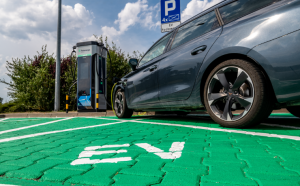
As part of its commitment to sustainable development, Autostrada Wielkopolska provides EV charging stations at all service areas along the concession section of the A2 motorway between Świecko and Konin. This ensures that drivers of increasingly popular electric vehicles—quieter than traditional combustion cars—can travel with confidence and plan their journeys effectively.
Noise levels along the A2 motorway between Świecko and Konin are regularly monitored by Autostrada Wielkopolska, including areas covered by the Natura 2000 programme. Where noise levels may exceed acceptable limits, acoustic barriers are installed, with heights adapted to local conditions.
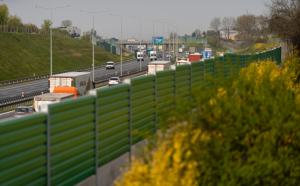
Currently, more than 40 km of noise barriers are in place along this section of the A2 motorway. Depending on the technology used, such barriers can reduce noise levels by 10–15 dB.
Greenery also serve as natural acoustic barriers. For this reason, vegetation is planted wherever possible—especially near interchanges, service areas and toll plazas—helping to absorb road noise. Earth embankments, which run alongside long sections of the motorway, also play an important role in reducing noise emissions.



In everyday life, a lack of concentration can lead to a funny mistake. Behind the wheel, the consequences can be…
Read moreWhat does a police officer’s day-to-day work involve? How can you stay safe on the road, and why can good…
Read more